Billboards vs Podcasts

Should you spend money on print advertising, like billboards, or should you spend money on digital marketing assets, like podcasts?

For decades, marketing has measured success by exposure.

How many people drove past it?
How many times was a logo seen?
How many impressions were served?

But being seen is not the same as earning attention. Attention is what builds brands.

As media habits change and people get better at tuning out distractions, it becomes clear that the metrics we have used for years no longer show how people connect with brands.

This is where long-form content, like video and podcasts, changes everything.

The Market Is Running Out of Time, Not Impressions

Every marketing channel competes for the same finite resource: human attention.

A billboard might be seen by thousands each day, but that does not mean anyone is engaged. Most people look for only a second or less. There is no sound, no context, no story, and no way to know if the message got through.

Now contrast that with long-form content.

When someone presses play, they are not just giving you a few seconds. They are giving you minutes, sometimes even hours, and they often come back again and again.

That difference matters far more than most dashboards acknowledge. Also, what does a billboard dashboard look like?

Why “Time Spent” Is a Better Metric Than “Impressions”

Traditional media buying favours reach because it is easy to measure. Time is harder to track, but it shows something important:

How long is your brand allowed to exist in someone’s mind?

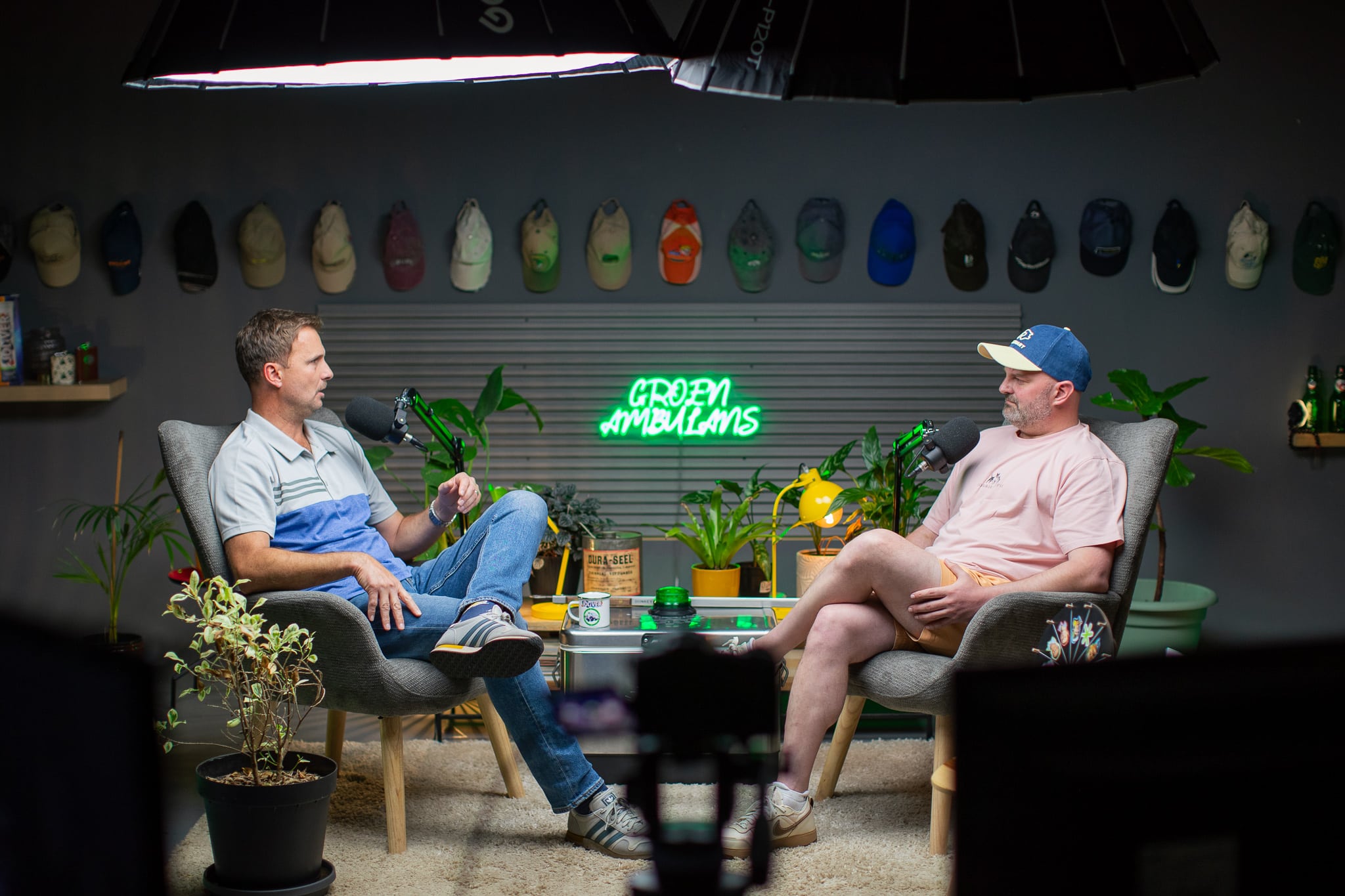
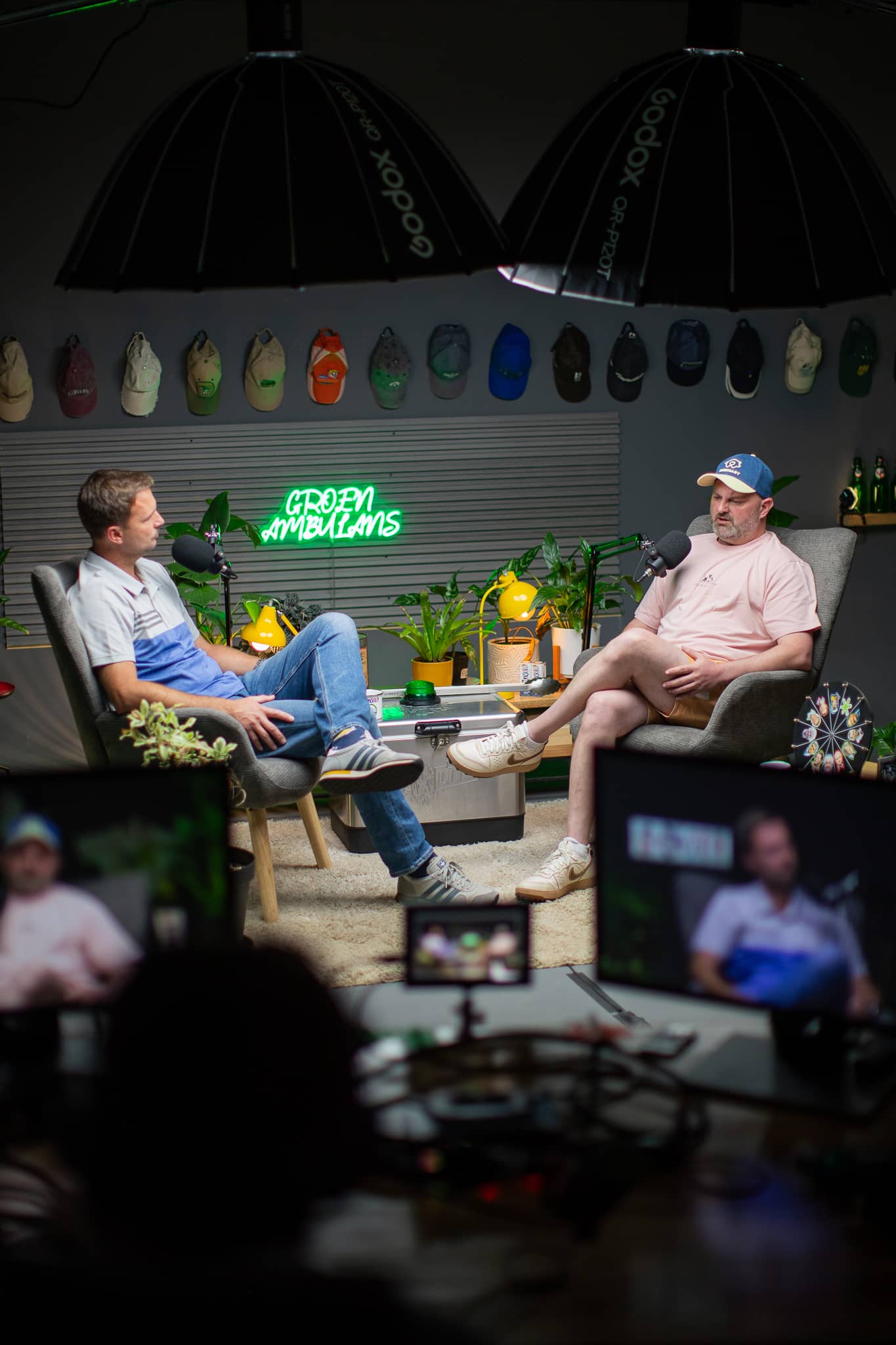
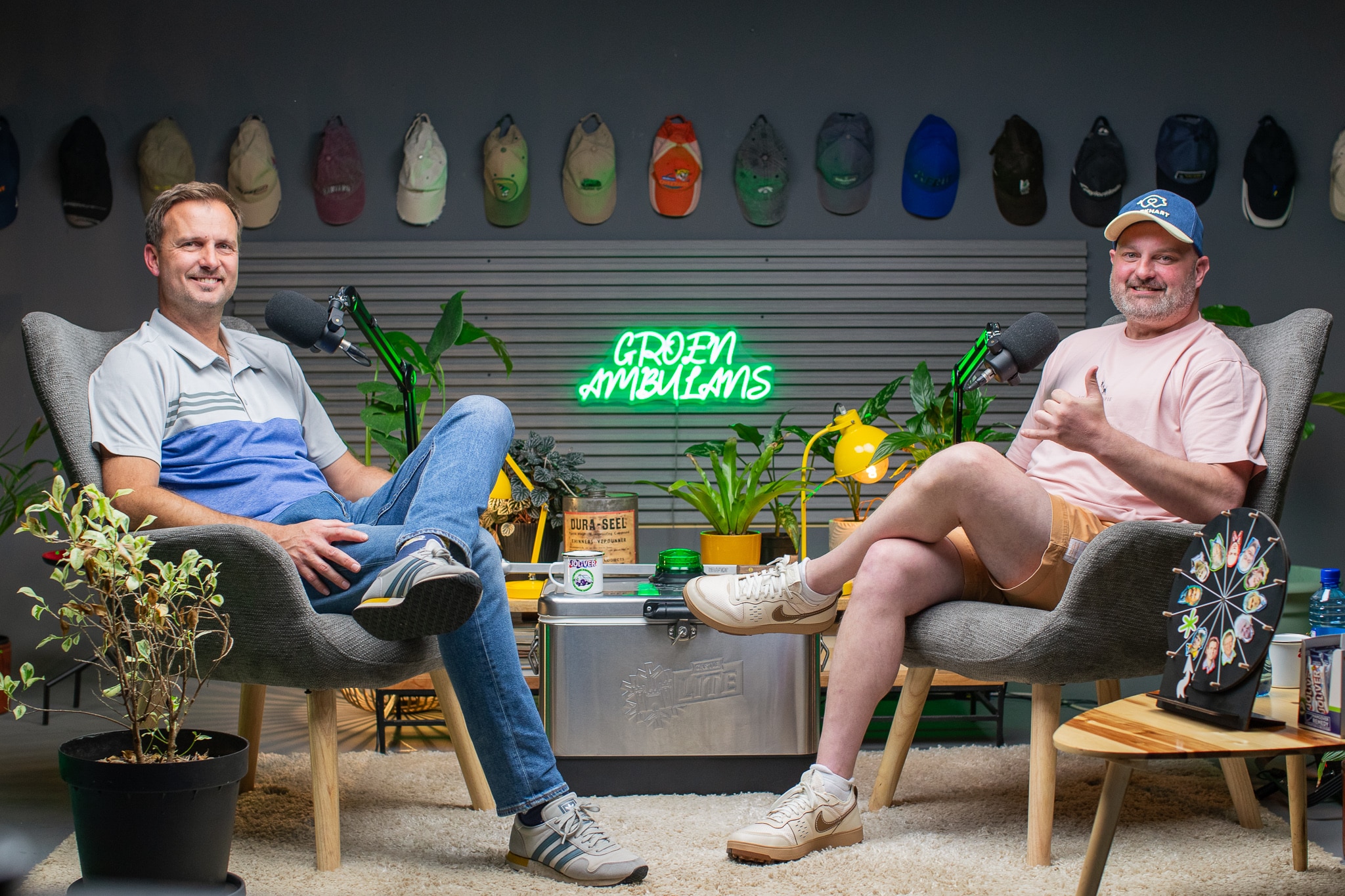
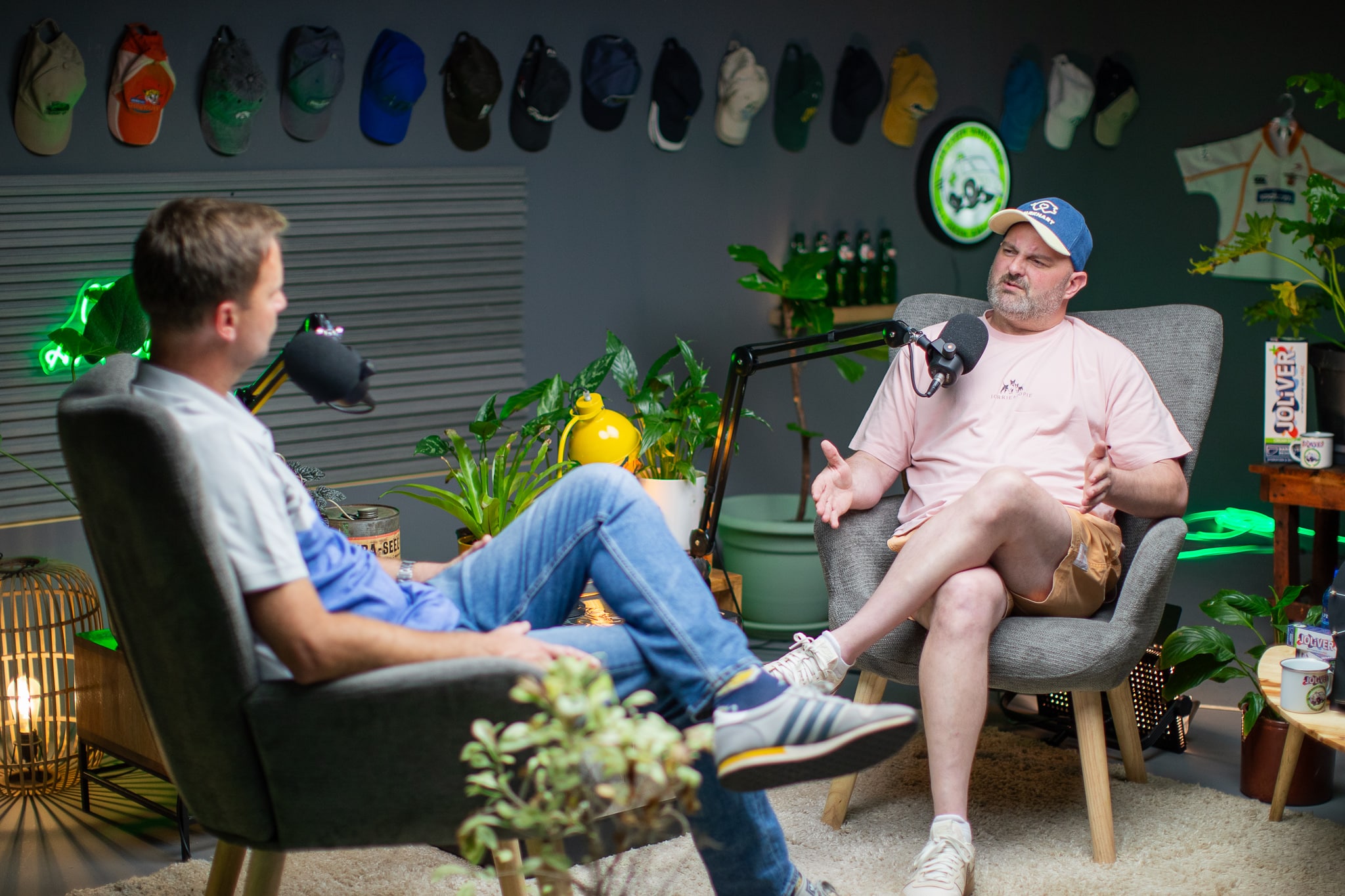
In our own work, a video podcast accumulated over 600,000 minutes of watch time across its first four published episodes. That isn’t theoretical exposure. It’s voluntary, sustained attention.

Getting the same amount of attention through traditional outdoor ads would cost R700 000, assuming:
A billboard costs R30 000 per month, reaches 10,000 daily passers-by, and is visible for at least 2 seconds.

Time spent doesn’t just measure exposure.
It measures the relationship you’re building.

The Difference Between “Seeing” and “Choosing”

There’s a massive difference between:

  • Being seen while someone is distracted; and
  • Being listened to after someone has intentionally chosen to give you their time.


Long-form content clearly belongs in the second group.

People listen while driving, working out, cooking, or travelling. It becomes part of their routine. The voices become familiar, and trust grows slowly, episode by episode.

This isn’t interruption marketing.
It is a presence that people choose to allow.

And that presence compounds.

Flame to Fire: The Power of a Body of Work

Traditional media expires the moment the spending stops. Your body of work does not.


Facebook, Instagram, Google, and LinkedIn will happily take your money for every campaign – forever. How do you engineer the transfer from paid attention to earned attention? The answer is long-form content. It becomes a lasting asset that keeps delivering value long after it is published. As your library grows, more people arrive already familiar with your brand and more willing to stay.

 
Each new listener can:
 
  • Discover past episodes
  • Spend extended time with your brand
  • Share content organically
  • Return again and again
 
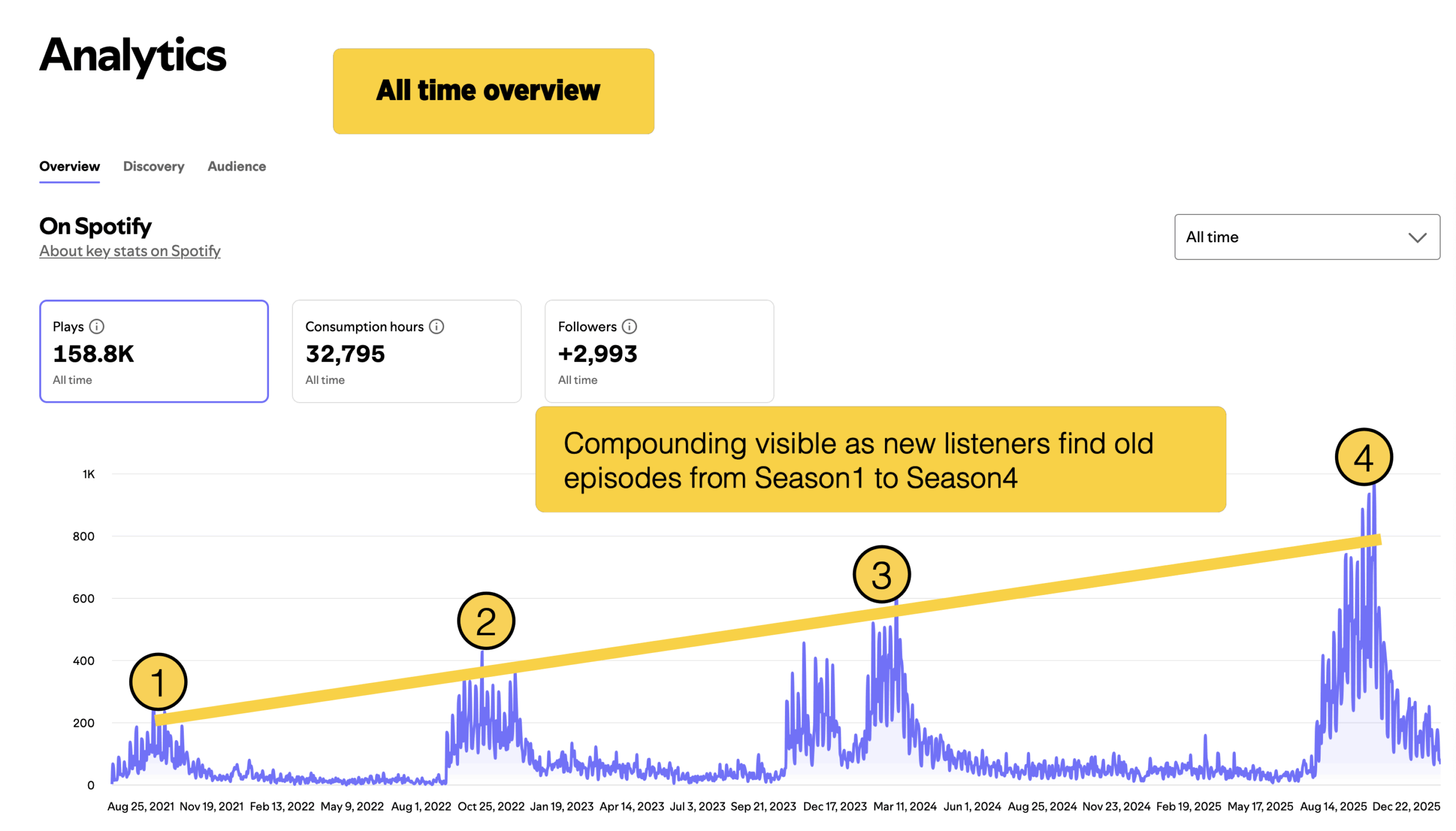
Watch this take effect over time.
Source: Current Project on Spotify for Creators
This creates growth over time that static media cannot match.
What matters is not how loud your message is on the first day, but how long it keeps delivering value.
 
A growing body of work becomes one of the most valuable assets a brand can build, not just because it exists, but because people can easily find and use it. You cannot create value from previous print or outdoor ads, but you can:
 
  1. Display your library of valuable content like the asset it is
  2. Consistently reference it and leverage it at scale to avoid repetition and reach broader audiences.
  3. Share, episode by episode or your library as a whole in a message or email.
  4. Prime your audience to sign up for new releases of what you are up to.

Handles That Build “Memory” at Scale

A common misunderstanding is that long-form content does all the work on its own.

Everything in marketing is skewed to what people see first. The stuff above the fold on the site, the first sentence of copy in the billboard, and in this case, the reels that will precede the long-form content. It is here, where 80 cents of every Rand will live or die, so get it right.

Promos, short-form cutdowns, images, and thumbnails act as entry points into the long-form experience. In one project, short-form content generated over 200,000 views, building familiarity and message recall long before audiences discovered the full episodes.

That matters for two reasons.

First, brand lift doesn’t only happen at conversion. Repeated short-form exposure builds recognition and lowers the friction required to commit to longer listening later.

Second, short-form acts like a network of billboards, but with motion, sound, personality, and context. Each piece finds its audience through algorithms that focus on relevance instead of follower count.

Together, these handles make it easier for people to start and keep engaging with long-form content.

In practical terms:

* Short-form delivered reach and familiarity
* Long-form delivered depth, trust, and time
* Together, they formed a complete attention system

Podcasting should not be seen as just one asset. It is an ecosystem, with short-form content helping people remember you and long-form content building relationships.

Attention Quality: All minutes are not Equal

Most marketing dashboards answer one question:

“How many people did we reach?”

Long-form platforms answer a different one:

“How long did people stay?”

This difference matters because time is the only measure that shows real, voluntary attention.

On platforms like YouTube, Spotify, and Apple, brands can see:

* Total watch or listen time
* Average consumption per episode
* Retention and drop-off patterns
* Repeat engagement over time

These metrics don’t estimate attention.
They record it.

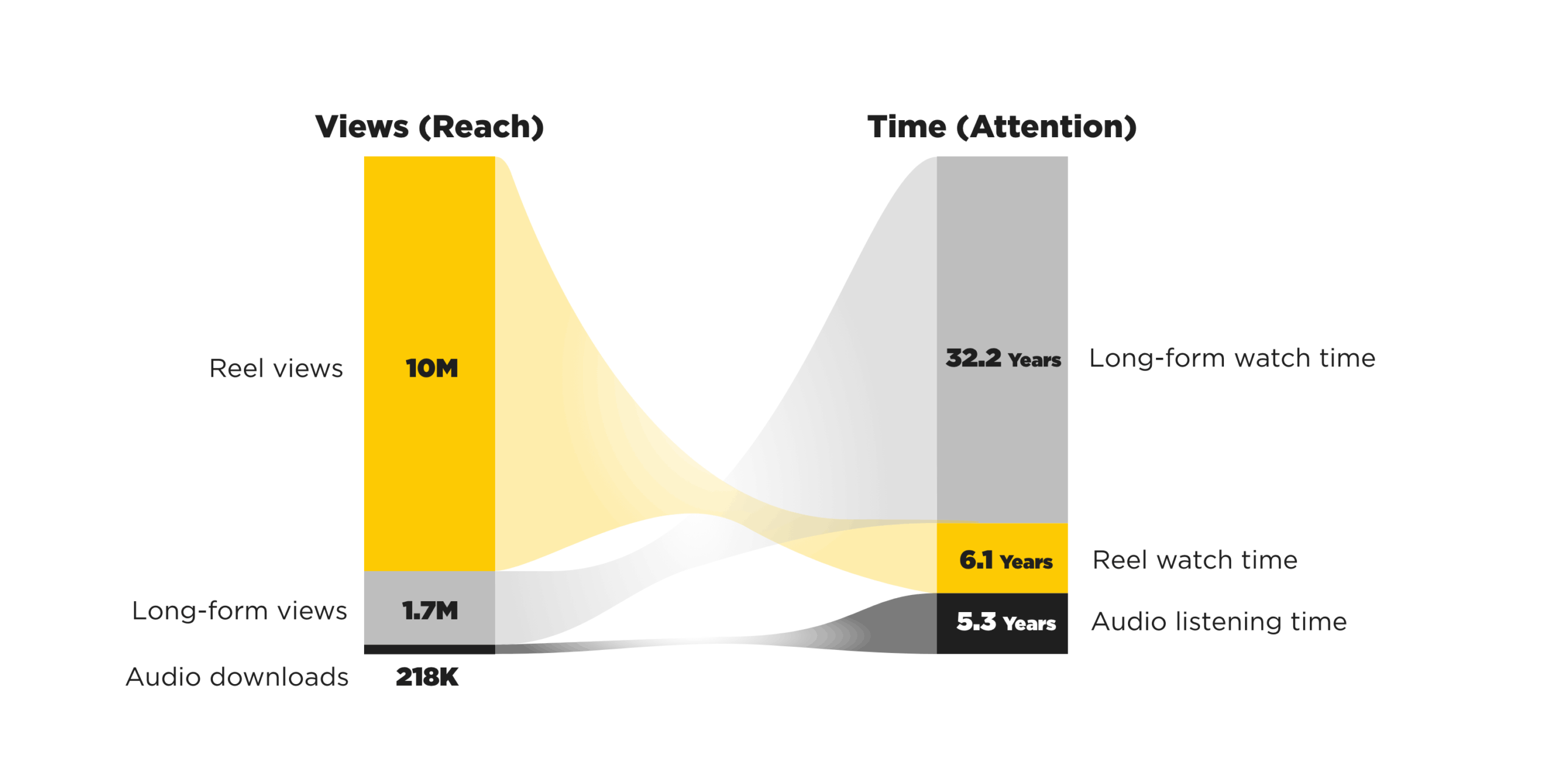
In another project, 10 million reel views generated 1.7 million long-form views and 218,000 podcast downloads. Each format delivered reach, but the quality of attention varied dramatically.

Each format should be seen as valuable in its own right. Short-form, long-form, and audio each create value on their own. When they work together, they do not compete for attention; they build on each other.

If you think of attention as total minutes over time, the difference is clear. Paid media creates a line that drops when spending stops. Long-form content creates a curve that keeps growing as new listeners find it and old episodes are played again.

This is where thinking only in terms of CPM does not work.

CPM measures exposure.
It cannot measure understanding, recall, or trust.

Time spent can.

Why Patience Has Become a Competitive Advantage

For brands operating in crowded, sceptical markets, the implication is clear:

The future belongs to those who earn attention, not rent it.

This does not mean you should stop using traditional channels. It means you should rethink how you measure value and realise that time spent is often a better sign of impact than reach alone.

Podcasting isn’t a silver bullet.
But it remains one of the few channels where brands can:

  • Speak at length
  • Be human
  • Build trust gradually
  • And let value compound


In a media environment obsessed with immediacy, patience has become a strategic advantage, so hold the course, don’t panic and don’t let the tail wag the dog. You are the idea, own it.

Overwhelmed?
No need.

Start here if you would like to pursue this for your brand

  1. How to produce an amazing podcast for your brand: The technical how-to.
  2. Sharing your podcast with the world: Getting more eyes on your work
  3. Branding School: How to get the brand stuff right before you start recording.
  4. Get a quote for us to do everything for you: Our studio, our gear, and you decide how deep you want to dive in.

Share this with someone.

LinkedIn
WhatsApp
Facebook
Twitter
Email
Brand Strategy is Poker The Media Farm
Articles
John-Henry Opperman

Your Brand Strategy Is Poker, Not Chess

Most people treat brand strategy like chess — calculated, predictable, and fully visible. But in the real world, branding plays more like poker: incomplete information, shifting odds, and constant adaptation. This article explores why the best brand strategies embrace uncertainty, experiment intelligently, and focus on resilience over control — with insights drawn from unexpected brand crises and behavioural economics.

Read More »
What is the difference between marketing and branding
Branding
John-Henry Opperman

Marketing vs Branding. What’s the difference?

Branding creates advocates. Marketing creates leads.
Branding is long-term. Marketing is short-term.
Branding defines your trajectory. Marketing helps your cash flow.
Branding is about getting people to feel something. Marketing is about getting people to do something.

Read More »
What to share on social media. Drive engagement now
Articles
John-Henry Opperman

What to share on social media. Drive engagement now

People will share content because of:

Social Currency: The content allows someone to seem informed, intelligent, progressive or anything that could resonate with their identity.
Triggers: What keeps people talking about things after the fact,

Emotion: Ideas that spark happiness, anger, sadness, whimsy will be shared more than ideas that don’t.

Practical value: It’s built into our DNA, help them survive, and it will thrive.
Story: Information can travel under the guise of what seems to be a story.

Read More »
What is video watch time
Articles
John-Henry Opperman

How to win with video – Understand watch time

Room 1: The Brand Room is where we ensure the business strategy is aligned with the brand strategy. Room 2: Workshop, Where we create the content, mix, match and replicate things and Room 3: Where we measure the performance of what we have done. This is a glimpse into Room 3; welcome to The Lab. 

Read More »
Free tools for your brand
Articles
John-Henry Opperman

7 Free tools to help your brand stand out.

These tools are for anyone who wants to level up their brand’s presence through consistency and overall look. At our studio we use them all the time and now we are sharing them with you! Mahala.

Read More »
TEACH YOURSELF 100 SETSWANA PHRASES
Articles
John-Henry Opperman

Teach Yourself 100 Setswana Phrases

As someone who can haphazardly butcher my way through a conversation in Sesotho, I have always found it incredibly inspiring to see racial and cultural divides dissolve just because someone can drop a line or two in local vernacular.

Read More »